Launch offer — valid today only

📄 Digital book in PDF · read it on your phone or print it

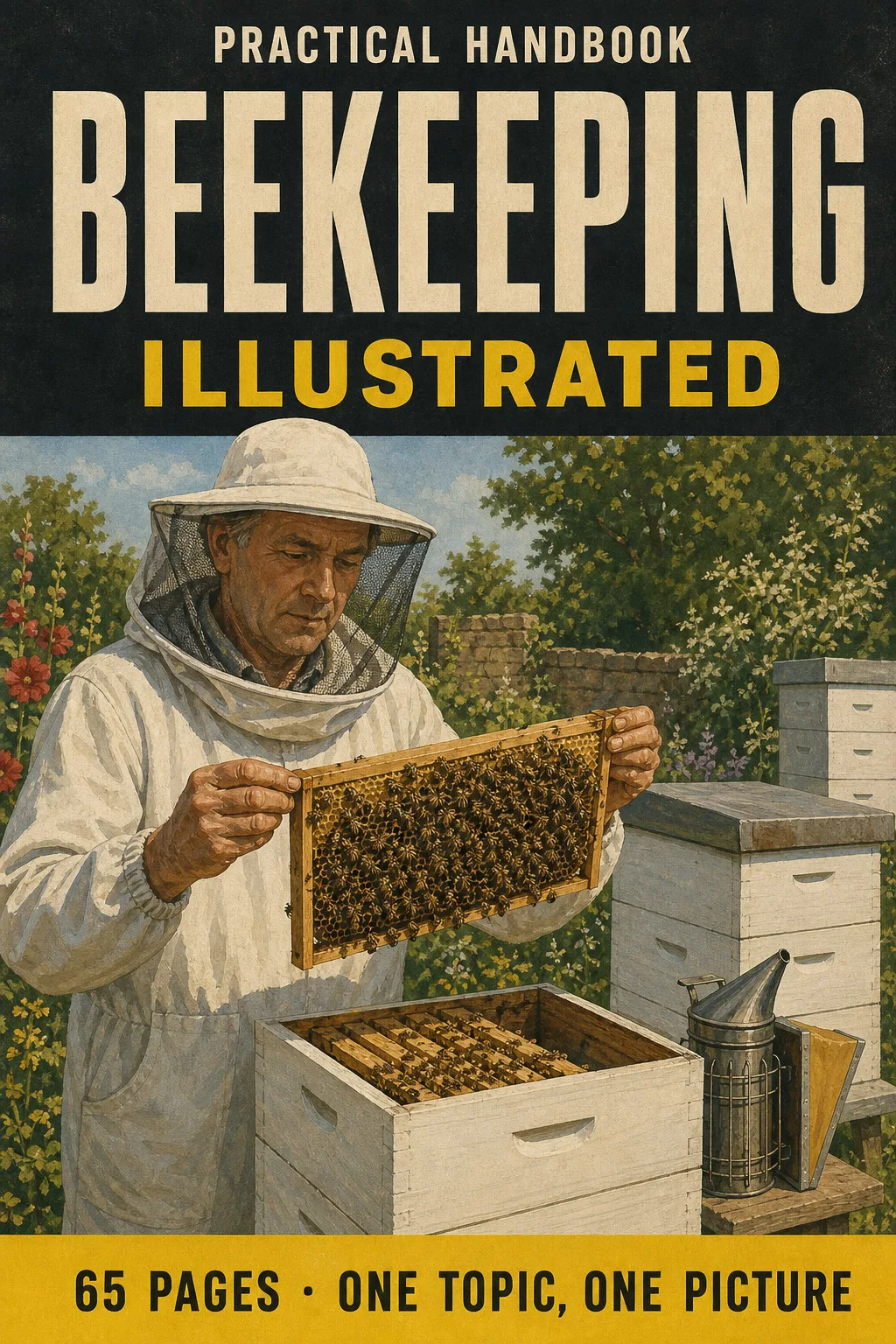
Beekeeping Illustrated: Inspect Every Hive in the Same Four Steps. One Topic on Every Page

The National hive, the four-step inspection, swarm cells, the artificial swarm, counting varroa, hefting for winter, the honey harvest and when to call your bee inspector. Every topic has its own page: the drawing first, then what you need to remember. 65 illustrated pages.

YES, SEND ME BEEKEEPING ILLUSTRATED

🔒 Secure checkout · PDF by email · 30-day guarantee

Every topic, its own pageEach inspection step drawn, with the explanation beside it
65 illustrated pages8 parts, from the colony to the quick review
Up-to-date sourcesNational Bee Unit guidance on BeeBase, the Bee Diseases and Pests Control Orders and the Honey Regulations
PDF by emailFormat

Look Inside the Book

Every page has one large drawing and a box with the numbers and steps you need to know:

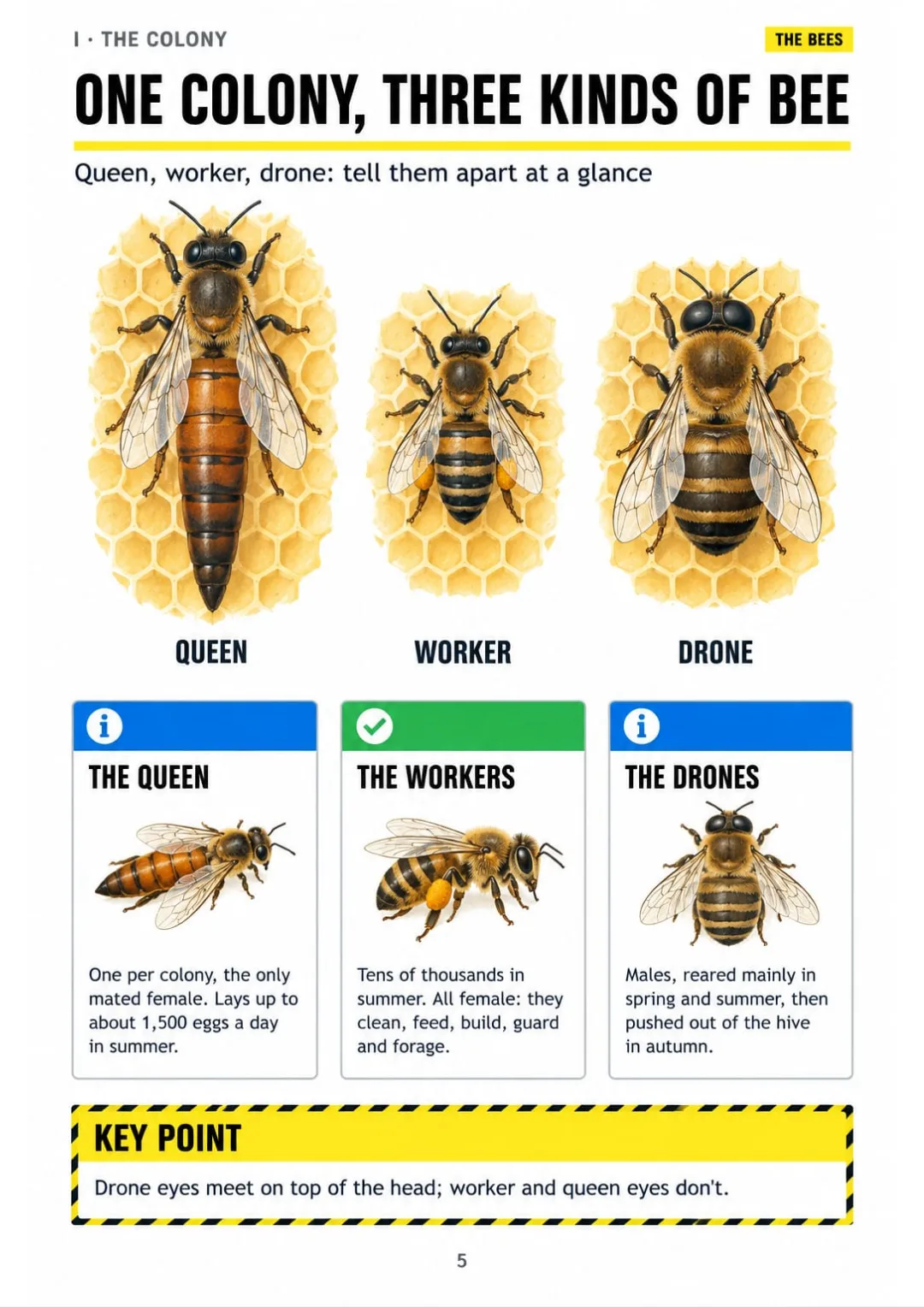
Queen, worker and drone side by side: what each one looks like and does
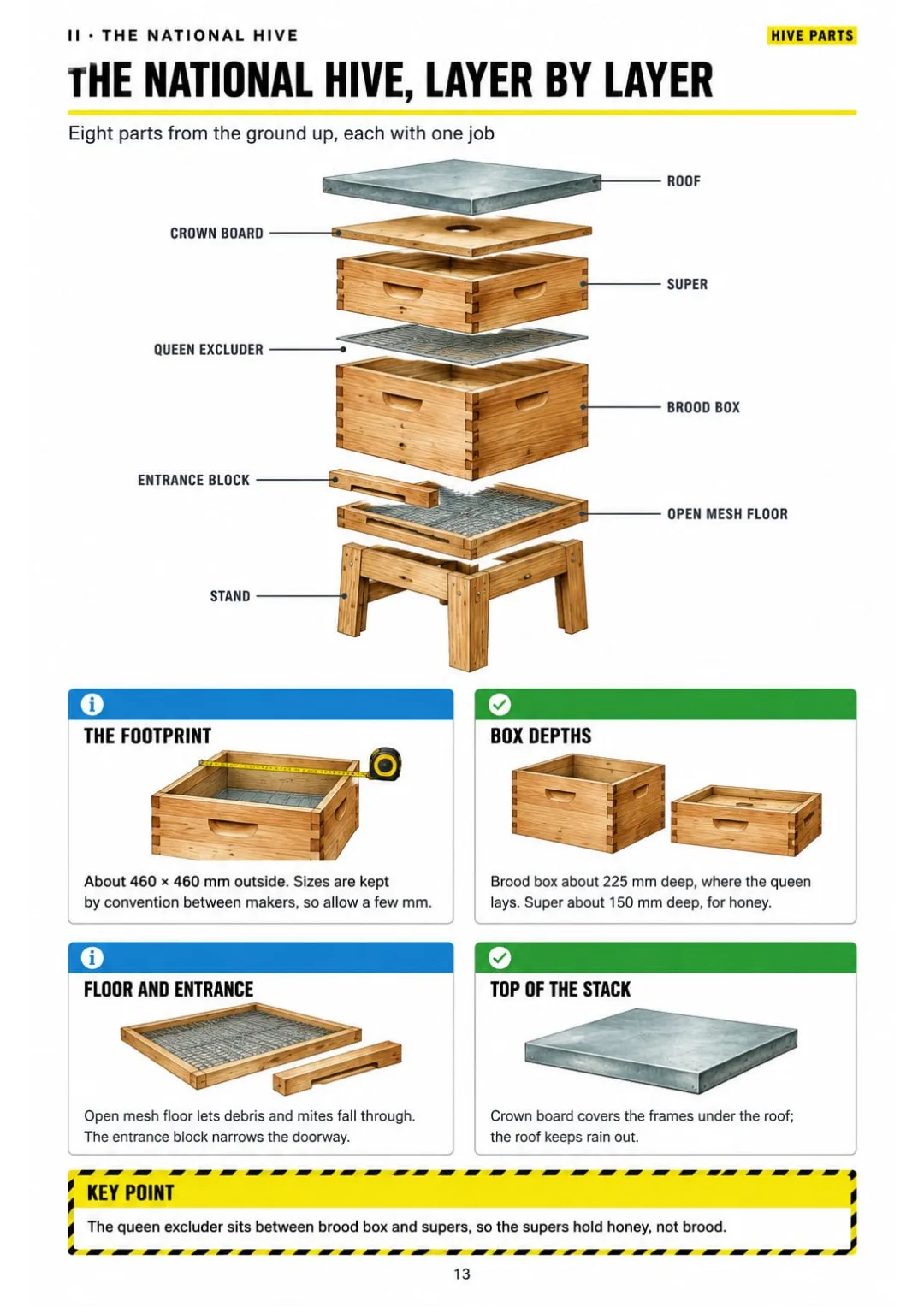
Floor, brood box, excluder, supers, crown board, roof: about 460 × 460 mm outside.
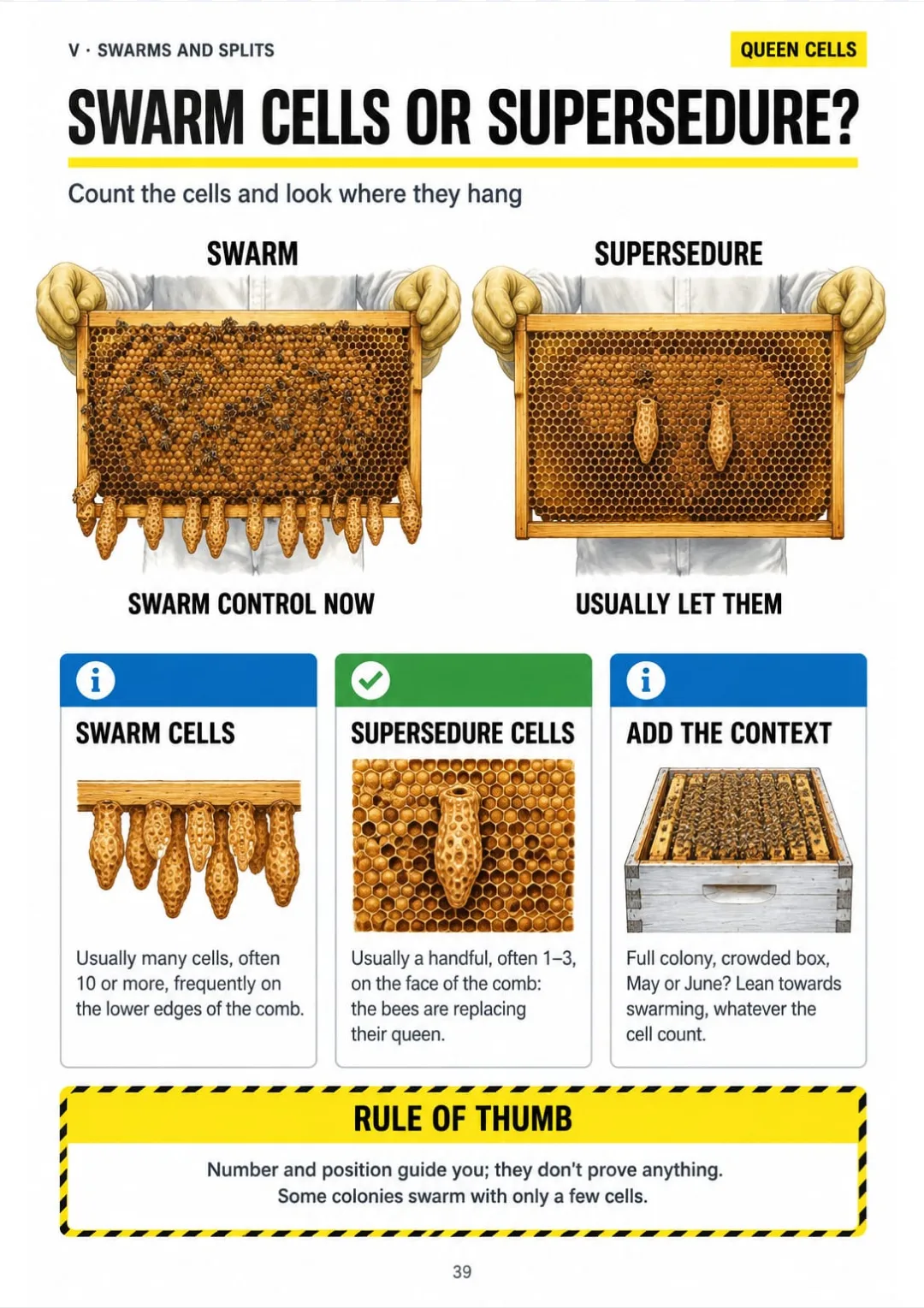
Swarm: often 10+ cells on the lower edges. Supersedure: usually 1–3 on the comb face.
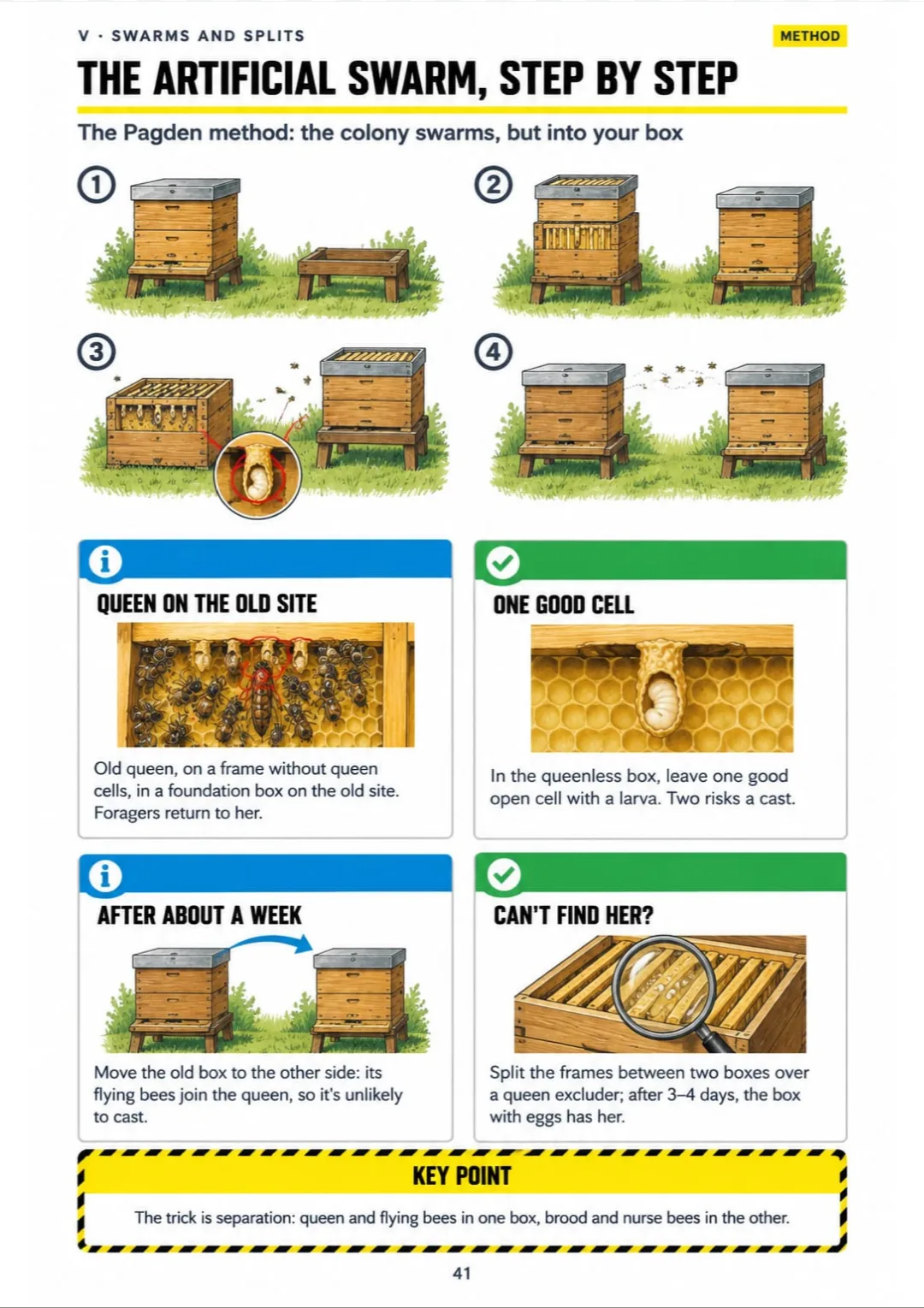
Queen on foundation on the old site, one good queen cell in the other box, move again after a week.
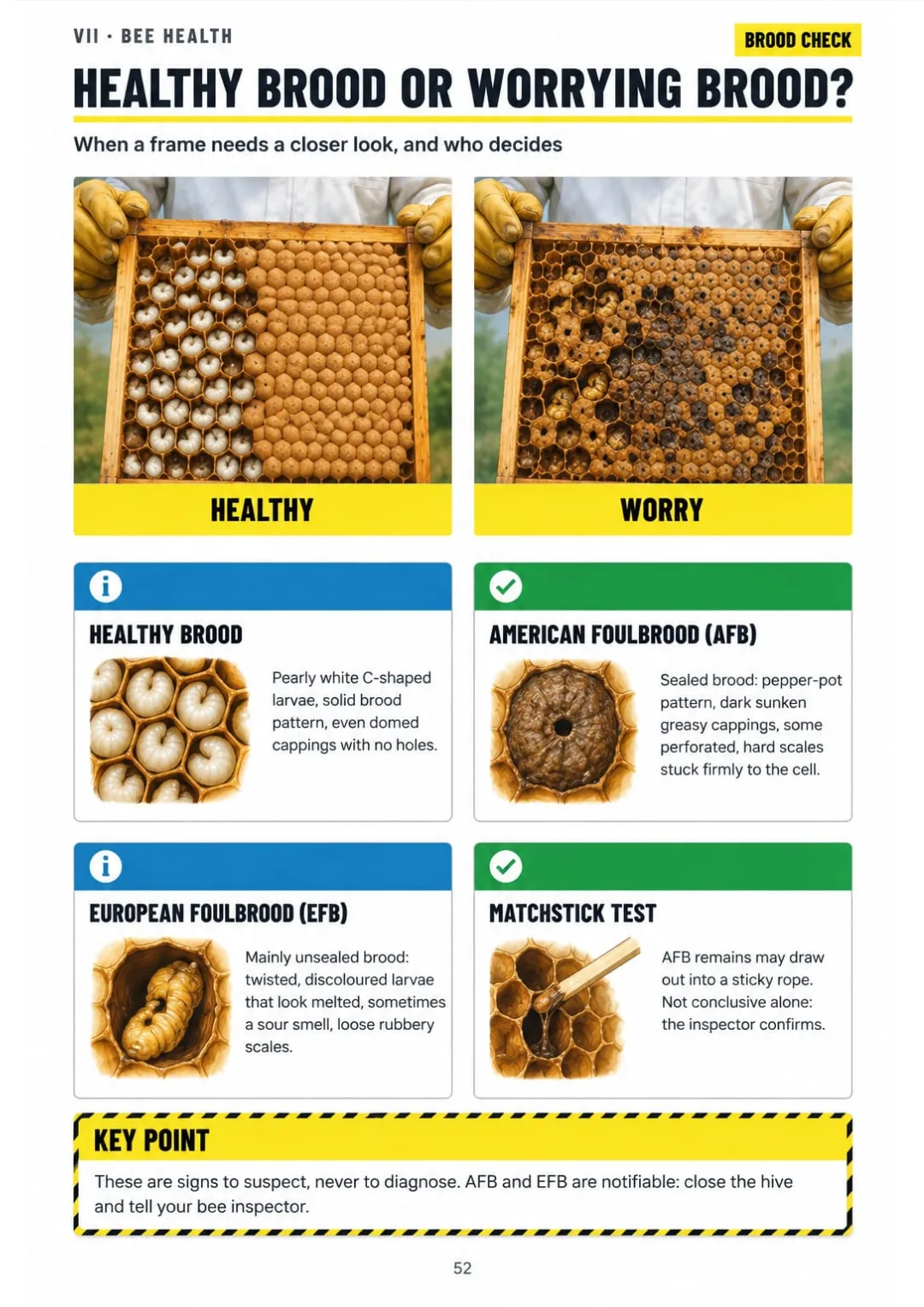
AFB hits sealed brood, EFB mainly unsealed brood: both drawn side by side with healthy comb.
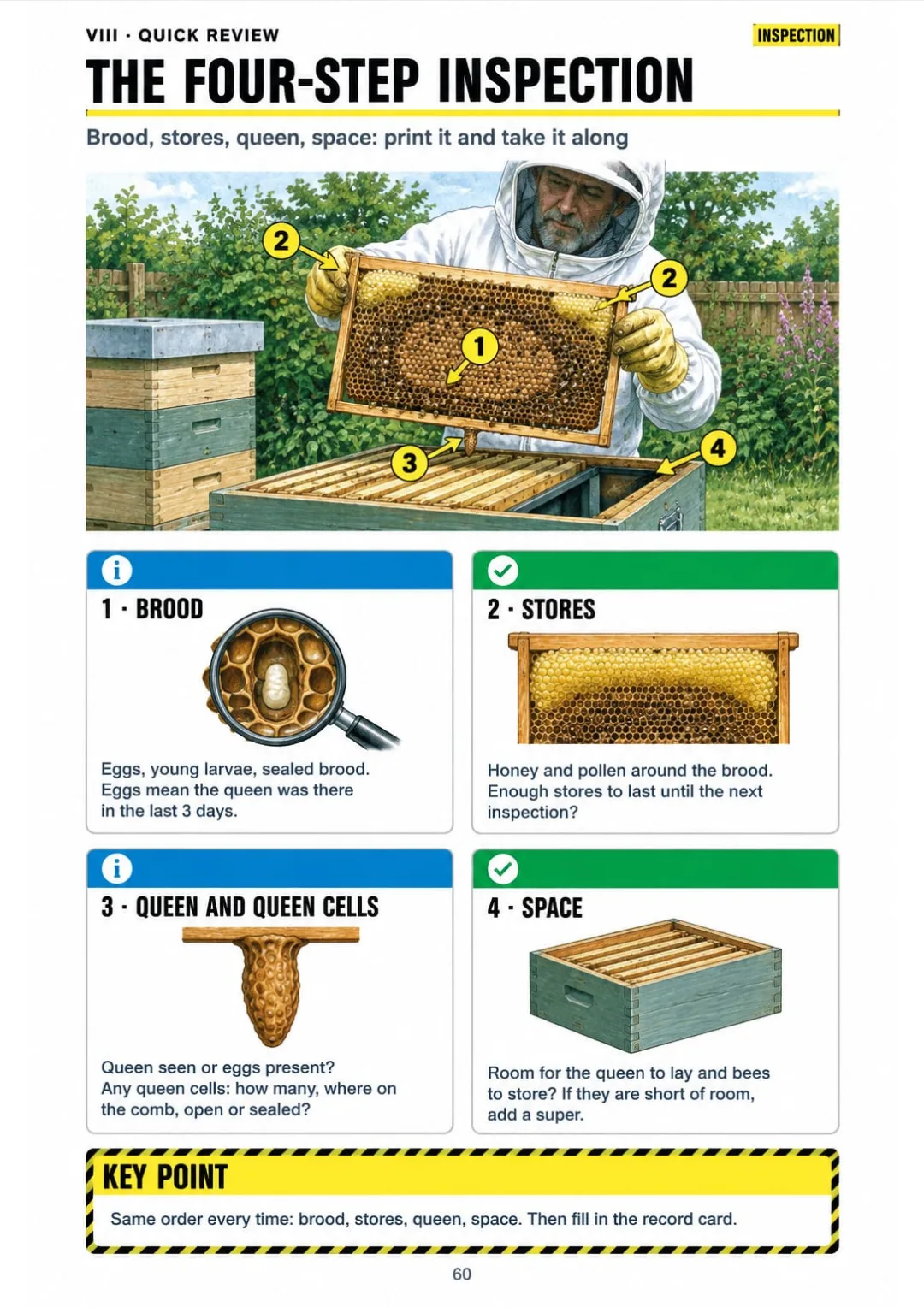
Brood, stores, queen, space: the whole inspection on one printable card.
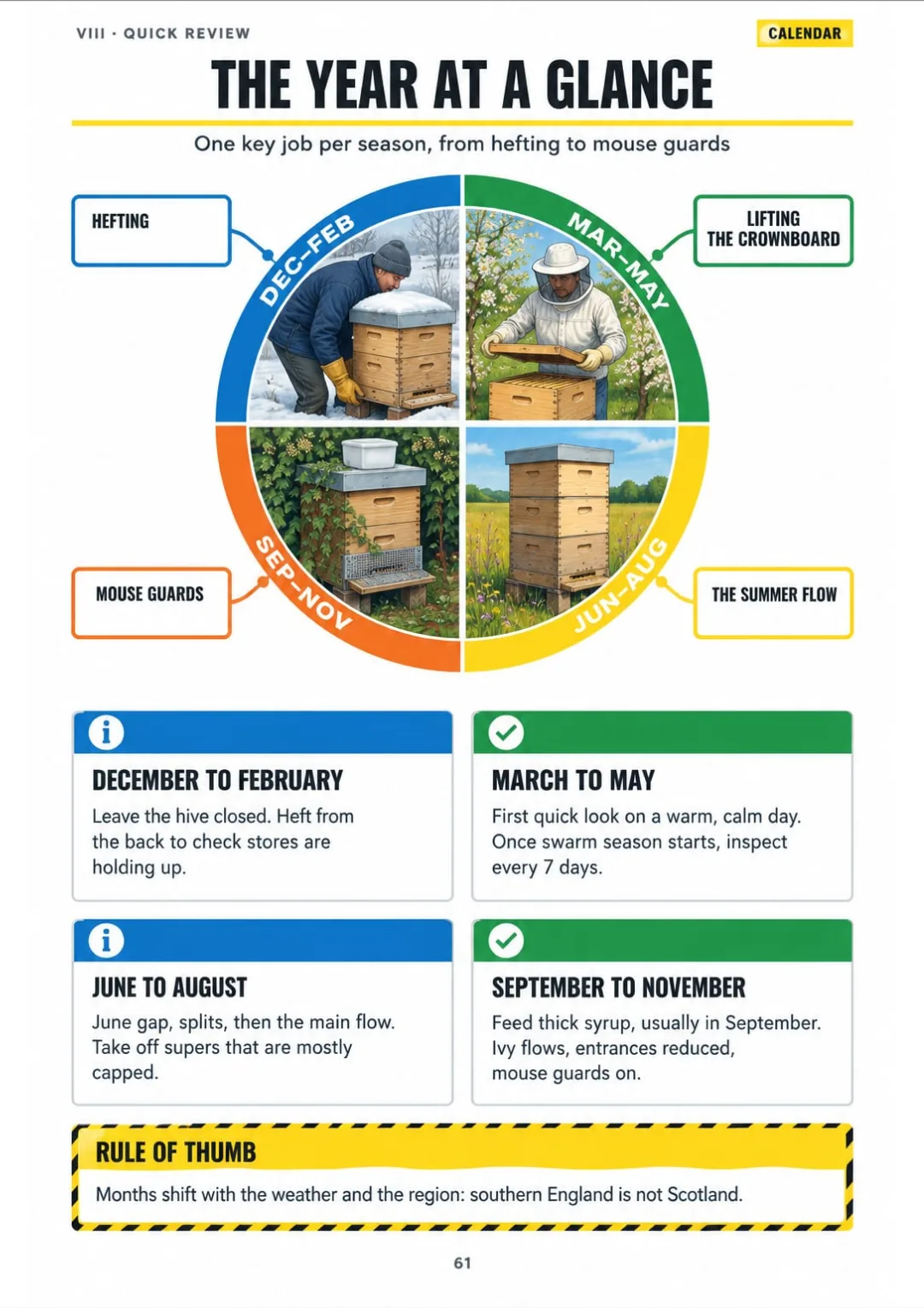
From hefting in winter to mouse guards in November: the year on one wheel.
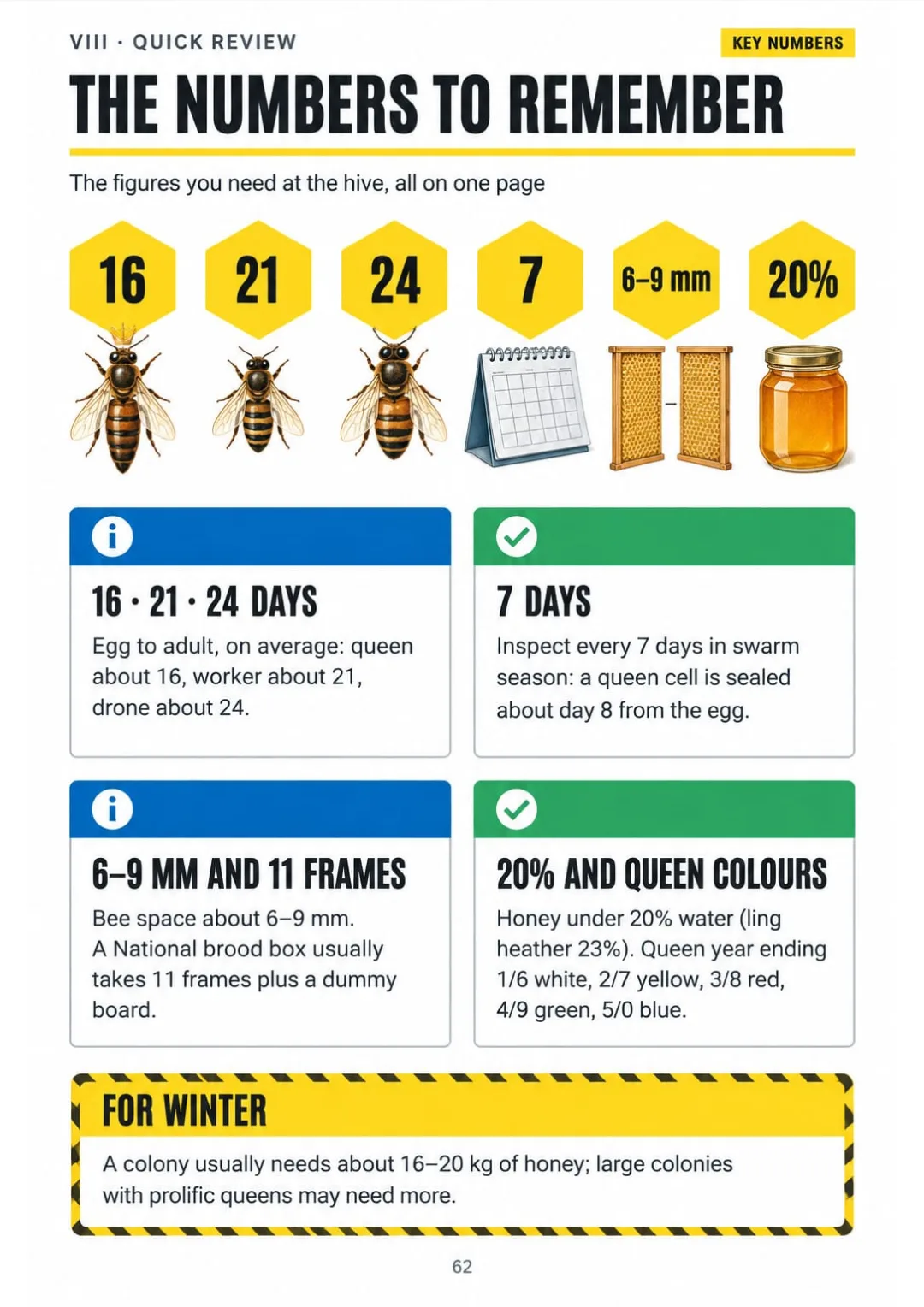
16, 21, 24 days · 7-day inspections · 6–9 mm · under 20% water · 16–20 kg for winter.

Swipe to see more →

These are real pages from the book. The table of contents is the full one: 8 parts and 61 topics.

The Problem Isn't You. It's How It Was Explained to You.

It's May. You lift a brood frame and there are queen cells hanging off it. Swarm or supersedure? The bees won't wait while you make up your mind.

Your book covers it in three long paragraphs, and the club gives you three different opinions. With the frame in your hands, words don't help much.

Swarm: often 10+ cells on the lower edges. Supersedure: usually 1–3 on the comb face.

In Beekeeping Illustrated that call is one page: swarm cells drawn along the lower edges, often ten or more; supersedure cells drawn on the comb face, usually one to three. You hold the frame up to the drawing and compare.

The same goes for the artificial swarm, the 7-day rule, hefting for winter, counting varroa and knowing when a super is ready: each one has its own page.

You know what you're looking at and what to do next, without going back indoors to check the manual.

COMPARE FOR YOURSELF

The Same Topic, Two Ways to Learn It

THIS
  • The manual: line after line
  • Hive parts explained only in words
  • You get to the hive still unsure
The National hive is a top-opening, single-walled hive whose external dimensions are approximately 460 mm square. Commencing at the base, the floor supports the brood box, which accommodates eleven British Standard deep frames, or ten together with a dummy board. Above the brood chamber a queen excluder is customarily positioned in order to confine the queen to the lower box, upon which one or more shallow supers are placed as the flow requires, followed by the crown board and finally the roof, which should afford adequate ventilation.
FOR THIS
  • The whole National hive in one drawing
  • The measurements in one box
  • You see it and it makes sense
Floor, brood box, excluder, supers, crown board, roof: about 460 × 460 mm outside.
CONTENTS

Take a Look at the 8 Parts and 61 Topics

The colony, the National hive and your kit, the four-step inspection, the UK beekeeping year, swarms and splits, feeding and the honey harvest, bee health and your bee inspector, and a quick review: 65 pages, all illustrated.

IThe Colony · pp. 5-12
  1. One colony, three kinds of bee
  2. From egg to bee: 16, 21, 24
  3. Reading a cell: egg, larva, sealed
  4. A worker's career
  5. How a frame is laid out
  6. What the colony needs to survive
  7. The winter cluster
  8. Temper and calm: what affects it
IIThe National Hive and Your Kit · pp. 13-19
  1. The National hive, layer by layer
  2. National frames: brood and super
  3. Bee space: the 6–9 mm rule
  4. Brood and a half, double brood, single brood
  5. Suit, gloves and smoker
  6. The hive tool and the frame grip
  7. Choosing a site for your hives
IIIThe Inspection in Four Steps · pp. 20-28
  1. Before you open: weather and timing
  2. Reading the entrance first
  3. Opening up the calm way
  4. Step 1: Brood
  5. Step 2: Stores
  6. Step 3: Queen and queen cells
  7. Step 4: Space
  8. Closing up without crushing bees
  9. Writing the record card
IVThe UK Beekeeping Year · pp. 29-36
  1. December to February: leave them alone
  2. March: the first quick look
  3. April: the colony builds fast
  4. May: swarm season at full speed
  5. June: the June gap and splits
  6. July and August: the main flow and harvest
  7. September: getting ready for winter
  8. October and November: ivy and closing down
VSwarms and Splits · pp. 37-44
  1. Why colonies swarm
  2. The 7-day rule in swarm season
  3. Swarm cells or supersedure cells?
  4. If you see charged queen cells: the decision
  5. The artificial swarm, step by step
  6. The nucleus split
  7. After the split: waiting for the new queen
  8. Collecting a swarm safely
VIFeeding and the Honey Harvest · pp. 45-51
  1. When and what to feed
  2. Hefting: how heavy is heavy enough?
  3. When is a super ready to take off?
  4. Clearing bees from supers
  5. Extracting, step by step
  6. Jarring and storing honey
  7. Selling a few jars: the label rules
VIIBee Health and Your Bee Inspector · pp. 52-59
  1. Healthy brood vs brood to worry about
  2. Notifiable pests and diseases in the UK
  3. Who to call: your bee inspector
  4. Varroa: the mite every colony has
  5. Counting varroa: three ways
  6. Deformed wings, crawling bees, chalky brood
  7. Asian hornet: spot it and report it
  8. Hygiene in the apiary
VIIIQuick Review · pp. 60-65
  1. The four-step inspection on one page
  2. The year at a glance
  3. The numbers to remember
  4. Decision cards: open or leave closed, split or wait
  5. When to call your bee inspector
  6. Common first-year mistakes

One Page, One Topic, All Clear

Think of it this way:

It's a warm afternoon in May, the club's advice is still going round your head, and the page you printed is in a plastic sleeve on the upturned roof beside you.

AFB hits sealed brood, EFB mainly unsealed brood: both drawn side by side with healthy comb.

You open it at the four-step inspection: brood, stores, queen and space, drawn in the order you check them, with what to look for at each step.

Beekeeping Illustrated is 8 parts and 61 topics, all drawn, with a quick review at the end: the numbers to remember, the year at a glance and decision cards.

What you see drawn, you don't have to memorize.

What's Inside Beekeeping Illustrated:

Ipp. 5-12

The Colony

Queen, worker and drone, egg to bee in 16, 21 and 24 days, reading a cell, how a frame is laid out and the winter cluster.

IIpp. 13-19

The National Hive and Your Kit

The National hive layer by layer, brood and super frames, bee space, brood and a half or double brood, suit, smoker, hive tool and siting your hives.

IIIpp. 20-28

The Inspection in Four Steps

You open every hive the same way: weather and timing, reading the entrance, opening up calmly, then brood, stores, queen and space, closing up and the record card.

IVpp. 29-36

The UK Beekeeping Year

The UK year month by month: leaving them alone in winter, the first look in March, swarm season, the June gap, the harvest and the ivy flow.

Vpp. 37-44

Swarms and Splits

You know what to do when you find queen cells: why colonies swarm, the 7-day rule, swarm or supersedure cells, the decision, the artificial swarm, the nucleus split and collecting a swarm safely.

VIpp. 45-51

Feeding and the Honey Harvest

When and what to feed, hefting, when a super is ready, clearing, extracting, jarring and the label rules for selling a few jars.

VIIpp. 52-59

Bee Health and Your Bee Inspector

Healthy versus worrying brood, notifiable pests and diseases, who to call, varroa and three ways to count it, and spotting the Asian hornet.

VIIIpp. 60-65

Quick Review

The inspection on one page, the year at a glance, the numbers to remember, decision cards and the common first-year mistakes.

At the end of the book: Decision cards, the year on one wheel and the numbers to remember on one page.
Plus: 2 Free Books

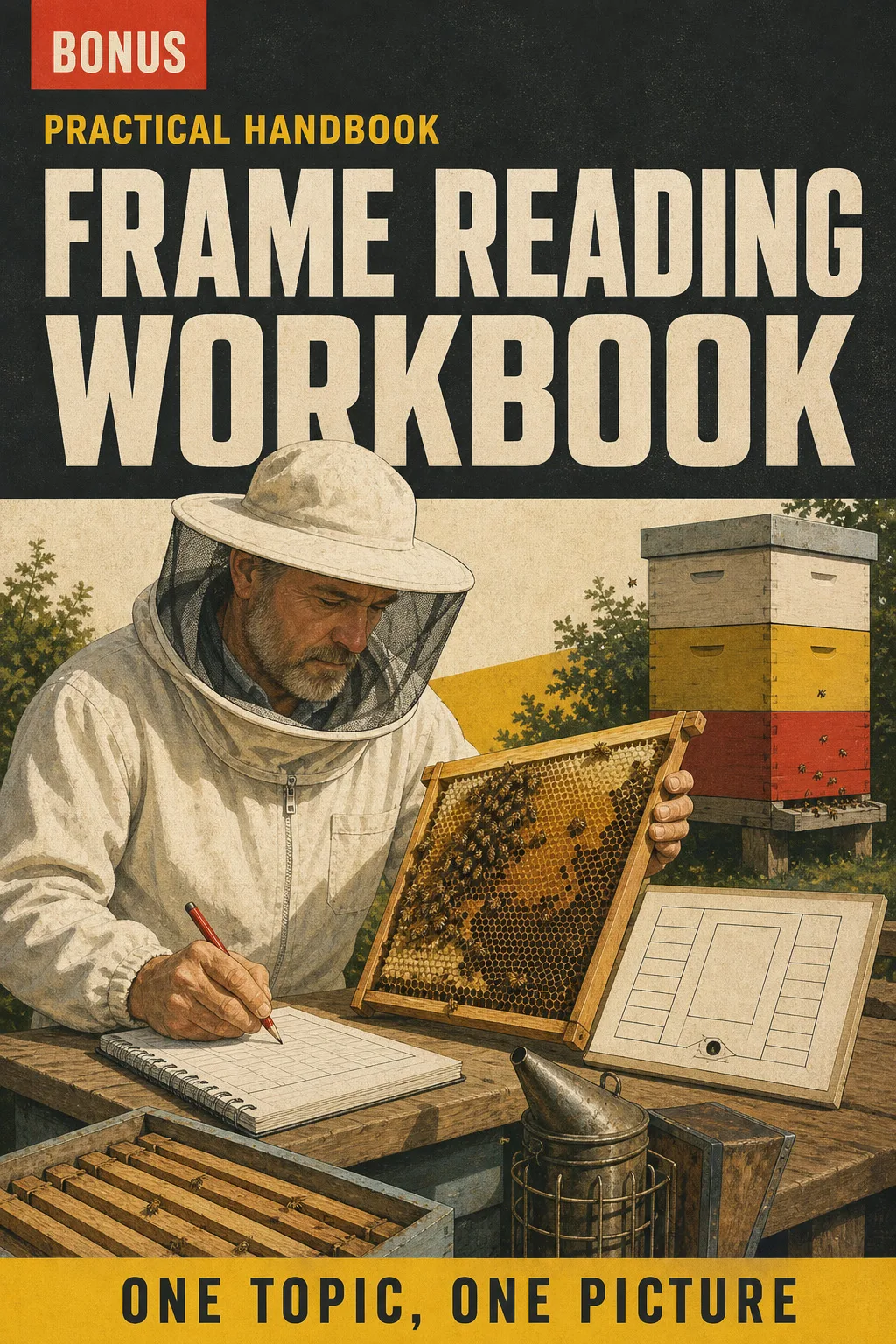
Frame Reading Workbook

BONUS 1: «Frame Reading Workbook»

Value on its own: US$ 17.90

Look at drawn frames and practise the call: healthy brood, capped stores, queen cells or time to contact your bee inspector, with the answers at the back.

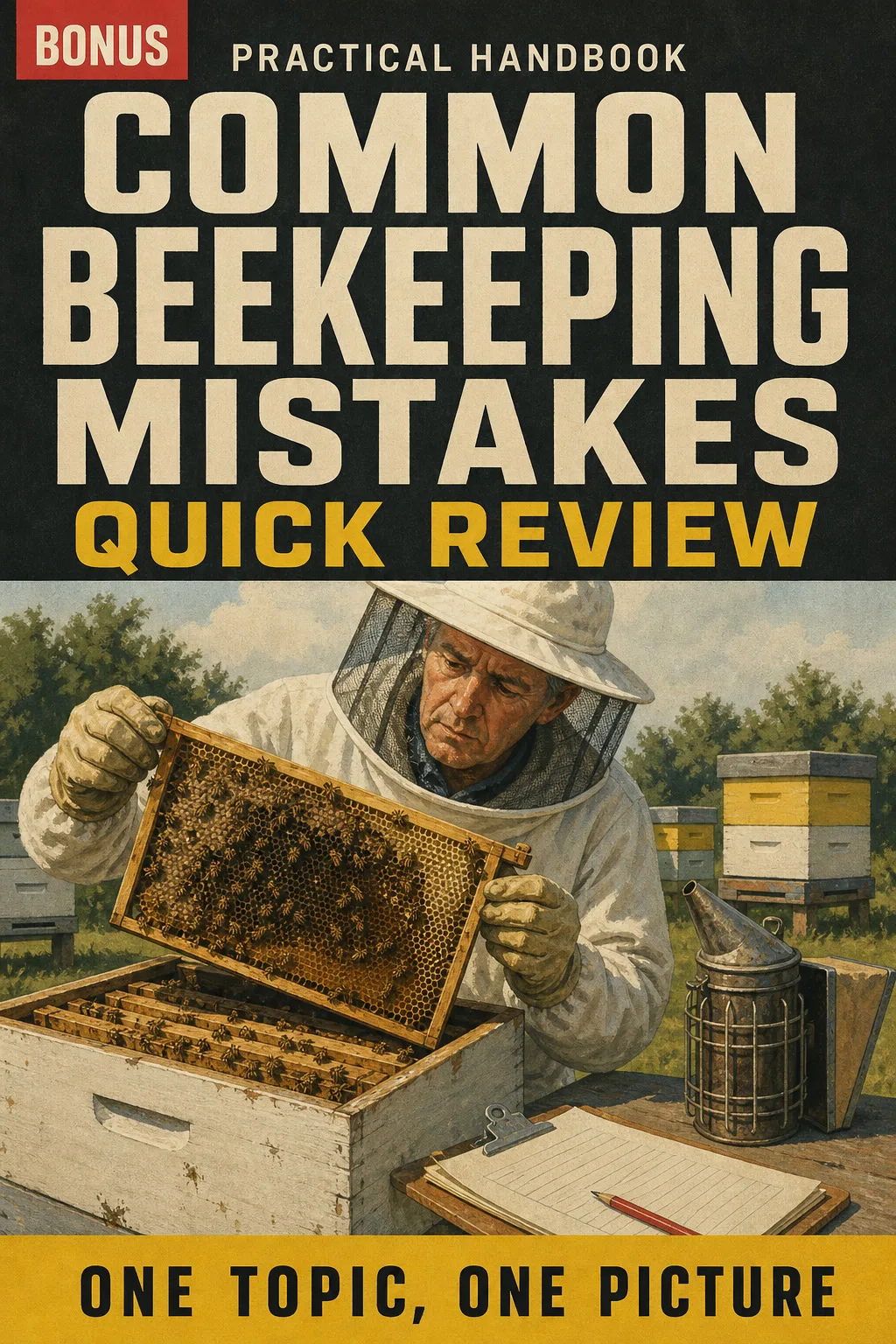
Common Beekeeping Mistakes: Quick Review

BONUS 2: «Common Beekeeping Mistakes: Quick Review»

Value on its own: US$ 14.90

The most common first-year mistakes, from opening the hive in the cold to missing queen cells, each one on a single page with what to do instead.

Beekeeping Illustrated with 2 Free Books

  • Beekeeping Illustrated: 65 illustrated pagesUS$ 63
  • BONUS 1: Frame Reading WorkbookUS$ 17.90
  • BONUS 2: Common Beekeeping Mistakes: Quick ReviewUS$ 14.90
  • High-resolution PDF to printIncluded
Total value US$ 95.80
YOUR PRICE:
US$ 27
You save US$ 68.80
YES, I WANT BEEKEEPING ILLUSTRATED FOR US$ 27

📄 This is a digital PDF book sent to your email: nothing is printed or shipped.

Secure purchaseEncrypted payment30-day guarantee

PDF by email: We email you Beekeeping Illustrated as a PDF, together with the two free books. It's a single payment: no instalments, no extra charges.

Who This Book Is For

You're in your first seasons

You're in your first seasons

Every inspection follows the same four steps, so you know what to look at before you lift the first frame.

Your Basic Assessment is next summer

Your Basic Assessment is next summer

Go over the colony, the hive, swarm control and bee health one page at a time, with the numbers to remember on a single page.

You already keep two or three hives

You already keep two or three hives

Print the pages you need and take them to the apiary: decision cards, the year at a glance and when to call your bee inspector.

Everything You Get Today

US$ 95.80US$ 27
YES, I WANT BEEKEEPING ILLUSTRATED FOR US$ 27

📄 This is a digital PDF book sent to your email: nothing is printed or shipped.

30DAYS
GUARANTEE

30-Day Guarantee

Try Beekeeping Illustrated for 30 days, bonus books included.

We refund everything if the file won't open, if the book isn't what you see here, if you were charged twice or if the email doesn't arrive. Just email us.

You pay once. No subscriptions.

Frequently Asked Questions

Is it for me if I've only kept bees for a year or two?

Yes. It's written for beekeepers with one to three hives who did a beginners' course and want one clear order to follow. It starts from the colony, so it also works if you're brand new. The hive measurements are for the National; the inspection, swarm control, feeding and bee health pages work the same in a WBC, 14x12 or Langstroth.

Where does the content come from?

From the National Bee Unit's public guidance on BeeBase, the bee diseases and pests orders for England, Wales, Scotland and Northern Ireland, the Honey Regulations and the British Standard National hive dimensions.

Is it official material?

No. It's an independent illustrated study book. It isn't published, approved or endorsed by any beekeeping association, the National Bee Unit or any government body.

Does it replace a course or a mentor?

No. It doesn't replace a hands-on course, a mentor or your bee inspector. It contains no treatments or doses: if you suspect disease, the page tells you to contact your bee inspector.

Are the practice exercises the ones in the Basic Assessment?

No. The frame exercises in the workbook are written for this book and aren't official questions from any assessment. It's a study book, so it doesn't come with a certificate: the Basic Assessment is still taken through your association.

When and how does it arrive?

As a PDF by email, sent to the address you enter at checkout. The two bonus books arrive the same way.

Do I have to pay every month?

No. It's a one-off payment, with no subscription.

Can I have it on paper?

Yes. Print it at home or at a print shop and take the pages you need to the apiary.

How does the refund work?

You have 30 days. We refund everything if the file won't open, if the book isn't what you see on this page, if you were charged twice or if the email doesn't arrive: just email us.

Before You Close This Page

No more rereading without it sticking.

Swarm cells and supersedure cells, drawn side by side.

You go to the hive knowing where everything is.

Drawings make studying faster.

The book is right below.

One-time payment: US$ 27 · Guarantee: 30 days · PDF by email

YES, I WANT BEEKEEPING ILLUSTRATED FOR US$ 27

📄 This is a digital PDF book sent to your email: nothing is printed or shipped.